Regulations, Market Trends, and “As-Is” Solutions for 2026
Navigating the Aftermath:
A house fire is more than a financial setback; it is a deeply emotional event. Once the smoke clears, South Carolina homeowners are often left with a property that feels less like an asset and more like a liability. Whether you are dealing with a scorched kitchen in a Charleston colonial or extensive structural damage to a mobile home in the Upstate, this guide serves as your central resource for turning a damaged property into a closed chapter.
1. The South Carolina Market Landscape: 2026 Outlook
Before listing a damaged home, it is critical to understand the ground beneath your feet. The South Carolina housing market has shifted from the frenzied pace of previous years to a more balanced, normalized environment.
- Cooling Inventory: As of late 2025/early 2026, inventory has risen, and the average “Days on Market” (DOM) in South Carolina has crept up to approximately 80 days for standard homes.
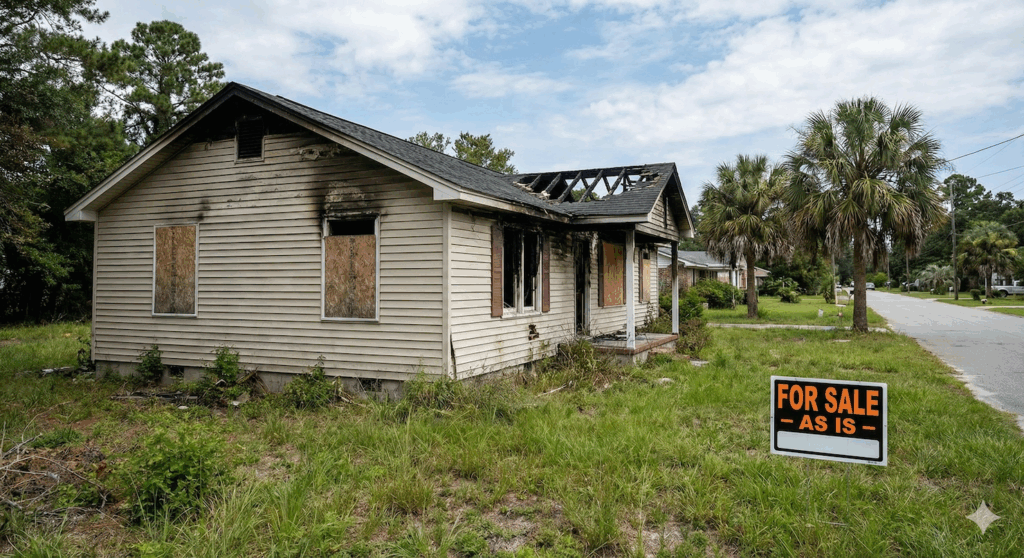
- The “Fire-Damaged” Penalty: For homes requiring extensive rehab, traditional buyers are scarcer. Banks rarely approve mortgages for homes with structural or safety issues, shrinking your buyer pool to cash investors or those using specialized renovation loans (like FHA 203k), which add months to closing.
- Regional Nuance:
- Coastal (Charleston/Myrtle Beach): Land value often exceeds structure value. Fire-damaged homes here may sell faster if marketed as “lot value” or “tear-downs.”
- Midlands & Upstate (Columbia/Greenville): Buyers here are often looking for livable affordability. Selling a fire-damaged home requires a steep discount to offset the cost of bringing it back to “livable” standards.
2. Legal Authority: South Carolina Disclosure Laws
In South Carolina, transparency isn’t just a courtesy; it is the law. Attempting to hide fire history can lead to severe legal repercussions.
The Residential Property Condition Disclosure Statement
Under SC Code Title 27, Chapter 50, sellers of residential property (up to 4 units) must provide a disclosure statement.
- Mandatory Disclosure: You are legally required to disclose “problems caused by fire, smoke, or water” to the property during your ownership.
- The “As-Is” Loophole: Even if you sell “as-is,” you must still disclose known material defects unless both parties agree to waive the disclosure in the contract (common in investor transactions, but you must ensure the paperwork is handled correctly).
- Liability: Failure to disclose fire damage that you were aware of can allow the buyer to sue for actual damages, court costs, and attorney fees, potentially unwinding the sale years later.
Pro Tip: Keep the official fire report from your local fire department and all insurance claim documentation. These are your “truth” documents that protect you from future liability.
3. The “Mobile Home” Factor: A South Carolina Specialization
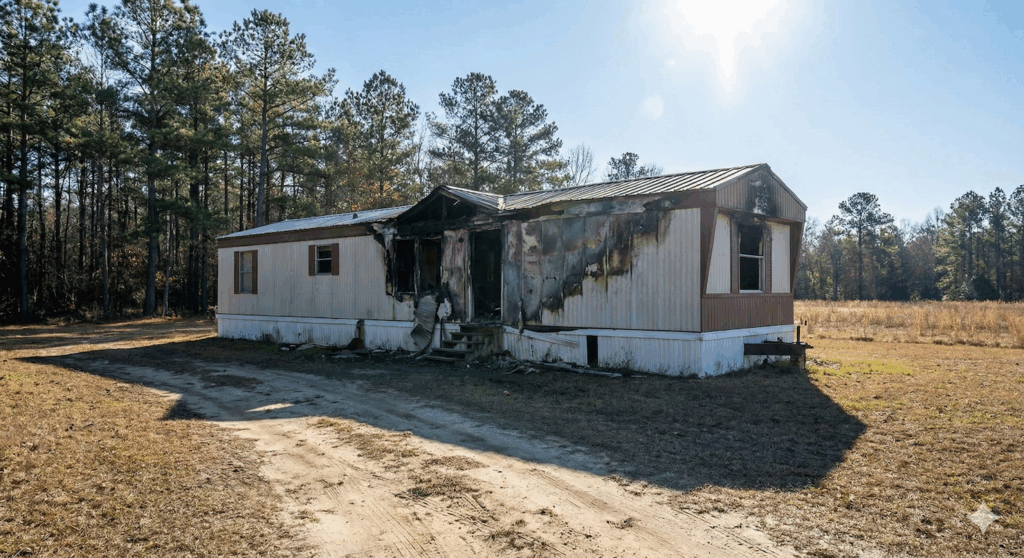
South Carolina has a high density of manufactured and mobile housing. Fire damage in these structures presents unique challenges compared to stick-built homes.
Understanding “Derelict” Status
If a mobile home is severely damaged, it may be classified as “derelict” under SC Code Section 6-1-150.
- The Risk: If a home is deemed unsafe or a health hazard, local counties can mandate its removal or destruction at the landowner’s expense.
- Title Issues: You cannot sell a mobile home without a clear title. If the home has been burned effectively to the frame, you may need to de-title the home or sell it as “scrap/personal property” rather than real estate.
- The Solution: Specialized buyers like We Buys SC Mobile Homes understand the DMV title transfer process for damaged units and can buy the home “where is,” saving you from the complex county demolition permit process.
4. Decision Matrix: The Three Paths to Selling
When facing fire damage, you generally have three strategic options. Use this comparison to decide which fits your situation.
| Feature | Path A: Full Restoration | Path B: Traditional “As-Is” Listing | Path C: Direct Cash Sale (The “We Buys” Route) |
| Ideal For | High-equity homes in premium neighborhoods (e.g., Downtown Charleston). | Minor cosmetic damage (smoke/soot only). | Severe damage, mobile homes, or need for speed. |
| Timeframe | 6–12 Months (Contractors + Permits). | 3–6 Months (Finding a buyer + Inspections). | 7–14 Days (Immediate closing). |
| Cost to You | High (Deductibles + Out-of-pocket upgrades). | Moderate (holding costs, taxes, utilities). | Zero (No repairs, no closing costs). |
| Complexity | High (Managing contractors, insurance claims). | Medium (Haggling with buyers after inspections). | Low (One walkthrough, one offer). |
5. Strategic Neighborhood Insights
Real estate is hyper-local. Here is how fire damage affects sales in key SC regions:
- Columbia & Lexington: The student and government rental market is strong here. Investors are often looking for rentals. A fire-damaged home that can be converted into a rental property is valuable, but only if the price allows for a profitable “Cap Rate” after repairs.
- Greenville & Spartanburg: This area is seeing rapid growth. “Ugly” houses are in demand by flippers, but competition is high. You need to ensure you aren’t lowballed by “wholesalers” who just want to resell your contract. Deal with direct buyers.
- Rural SC (Aiken, Florence, Orangeburg): Selling a fire-damaged home in rural areas can be incredibly slow due to lower demand. This is where a statewide buyer like We Buys SC Mobile Homes becomes essential, as they operate in areas where local realtors may not give a damaged listing much attention.
6. Why “We Buys SC Mobile Homes” is the Authority Choice
When you are selling a house that has been through a fire, you are not just selling a structure; you are selling a problem. We Buys SC Mobile Homes specializes in being the solution to that problem.
- We Buy What Others Won’t: Most realtors will not list a mobile home with fire damage, or a stick-built house with a compromised roof. We do.
- Semantic Integrity: We understand the difference between “smoke damage” and “structural charring.” Our offers are based on tangible land value and salvageable materials, not low-ball guesses.
- Local Trust: Unlike national call centers, we are rooted in South Carolina. We know the local county clerks, the specific mobile home title laws, and the neighborhoods.
- Cash Simplicity: We use our own funds. This means no waiting for a bank inspection that you know the house will fail. We buy “As-Is” in the truest sense of the word.
7. FAQ: Fire Damage & Selling in SC
Q: Can I sell a house if I already filed an insurance claim?
A: Yes. In fact, you can often keep the insurance payout (to cover your personal property and loss of value) and then sell the damaged shell to a cash buyer. This is often the most profitable route (“Double Dip” strategy).
Q: Do I need to clean the smoke damage before you view it?
A: No. Cleaning soot requires specialized chemicals. If you do it wrong, you can smear it and make it worse. We prefer to see the home exactly as it is.
Q: What if the fire department condemned the house?
A: We can still buy the land. Often, the value of the property is in the dirt, the well, the septic tank, and the driveway. We handle the demolition of the condemned structure after closing.
Next Steps for You
Are you holding onto a fire-damaged property that is costing you money in taxes and insurance every month?
Stop the financial bleed today. We can provide a fair, no-obligation cash offer for your South Carolina home or mobile home within 24 hours.